We keep hearing about the need to get more energy from renewables, but…
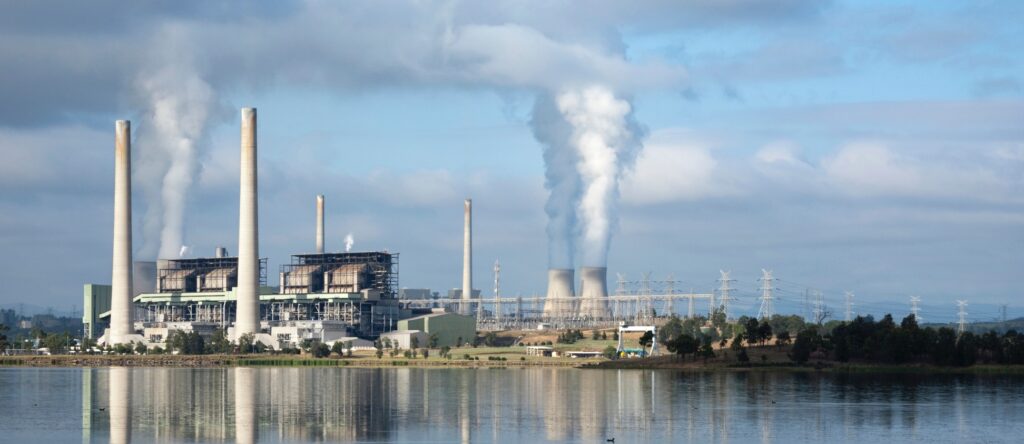
Traditionally, Australia’s been a coal-reliant country when it comes to energy production. And it’s easy to see why. Coal’s our largest energy resource, with the most recent figures putting our recoverable identified resources of black coal estimated at 162,279 million tonnes. Of that, recoverable economic demonstrated resources were 75,433 million tonnes.
The total recoverable identified resource of brown coal was estimated at 436,652 million tonnes, of which recoverable economic demonstrated resources were 74,039 million tonnes.
(The difference between recoverable identified resources and recoverable economic demonstrated resources for those playing along at home are what’s economically feasible to mine under current market conditions and with current technology.)
So, in short, we’ve got a sh*t load of coal. In fact, only the US, China and India have more accessible black coal than we have, and only Russia has more brown coal.
We export around 335 million tonnes of coal every year. In fact, it’s been suggested that coal was one of the reasons that we were able to ride out the GFC so well. In the 2023-24 financial year, Australian coal exports were valued at $91 billion, so it’s a huge financial benefit to the country.
The shift to renewable energy
However, coal-fired power generation continues to decline as more and more focus is put on renewables.
When it comes to coal, the ‘against’ column is pretty big – with air, ground and water pollution, to the environmental impact mining leaves in its wake, the headliners.
It’s reported coal’s health impacts cost the taxpayer $2.4 billion every year, and coal-fired power stations expose two million Australians to toxic pollutants.
When it comes to climate change, Dr Kate Charlesworth, Climate Councillor stated: “The overwhelming majority of scientists say there can be no more coal mines if we’re to have any chance of a safe climate. Medical organisations are increasingly recognising the health risks, with the British Medical Journal describing climate change as a ‘health emergency’.”
Renewable energy, meanwhile, provokes criticism from regional and rural communities who see landscapes altered on mass and land use changed, while issues such as solar panel end-of-life challenges are still to be fully resolved.
However, the immediate problem is this: if you pull the plug on coal today, we just don’t have anywhere near enough power.
Renewables contributed 35% of total electricity generation in 2023, specifically solar (16%), wind (12%) and hydro (6%).
The renewables share of total generation was up 3% on 2022, and about 20% of Australia’s electricity was generated outside the electricity sector by households and businesses.
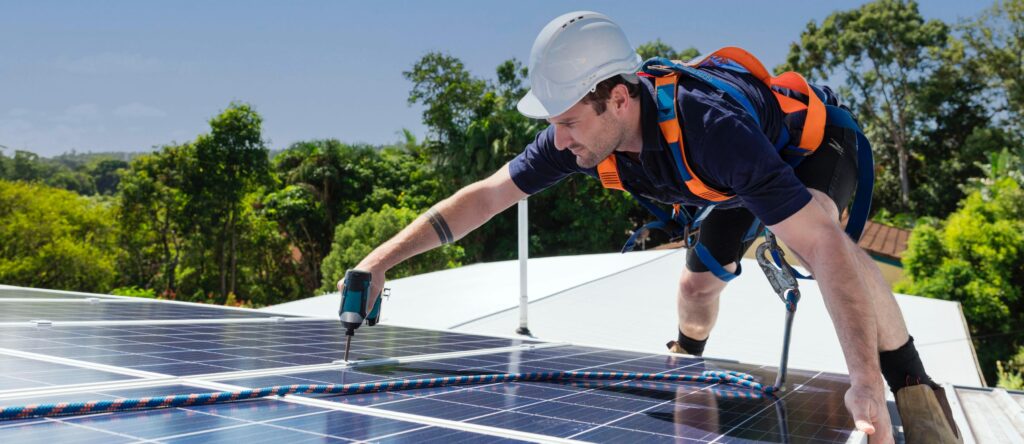
According to the Clean Energy Regulator a total of 3.912 million solar power systems have been installed onto Australian homes and small businesses. With 10.8 million homes in Australia, that means more than 35% of homes in Australia have solar panels today.
So, what does the future look like?
Ad:
There’s no straightforward path
It’s pretty clear renewables are going to keep growing and growing, and a host of coal-fired power plants are either being decommissioned or are scheduled for closure within the next decade.
There are a whole host of questions to ask and answer. For example, grid stability. A mix of energy sources will challenge our ability to maintain a reliable grid – particularly with intermittent sources of power, such as solar and wind.
The grid itself is designed for more centralised power sources, and it will need to adapt to accommodate more distributed sources.
Add to that the increased demands on the grid over the coming years. A growing population, a projected increase in EVs and rapid increases in data storage… we need more and more electricity.
And that’s not to mention the impact of closing mines and coal-fired power stations – individuals and communities rely on these industries for their livelihoods, and the country’s cash flow will likely take a hit.
The coming years are going to be incredibly interesting in terms of how we strike the right balance here, but one thing’s for certain – there’s not a straightforward solution.
Happy hydro?
As we can see from the table on this page, hydro power production’s fallen over the past 10 years. When there’s reduced rainfall or drought, reduced water levels lead to reduced capacity – meaning hydroelectric slows or stalls. While solar power has an expected base level of production, hydroelectric is at the mercy of the weather gods – making it risky to rely upon to any great extent.
Desalination plants can help, and several were built during the Millennium Drought. In fact, the Victorian Desalination Plant, which was finished in 2012, didn’t need to release water for public use until 2017.
Table showing Australian renewable energy production 2022-23. Source: Energy.gov.au
Discover the new-look Electrical Gems and what’s inside the Marketing & Reputation Issue for Australian electrical contractors.
[...]<p><a class="btn btn-secondary understrap-read-more-link" href="https://gemcell.com.au/news/electrical-gems-marketing-reputation-issue/">Read More...<span class="screen-reader-text"> from New launch: Electrical Gems – The Marketing & Reputation Issue</span></a></p>
The popular Ventair Stanza ceiling fan has been upgraded to an energy-efficient DC model, delivering a practical, modern solution for homes, classrooms, offices and light commercial spaces. Designed as a hassle-free retrofit, Stanza DC provides the power-saving benefits of DC motor technology while retaining the simplicity of a wall control. It is compatible with existing [...]<p><a class="btn btn-secondary understrap-read-more-link" href="https://gemcell.com.au/new-products/ventair-stanza-dc/">Read More...<span class="screen-reader-text"> from Ventair – Stanza DC</span></a></p>
The new LEDVANCE HouseGuard Security Floods are now available as a full family of products to suit every residntial application when you need instant light for safety and security. The range is available in both Back and White to complimentyour exterior colour. Single 12w ( Lumen package 1200lms ) and Twin 12w ( 24w Total [...]<p><a class="btn btn-secondary understrap-read-more-link" href="https://gemcell.com.au/new-products/ledvance-houseguard-security-floodlight/">Read More...<span class="screen-reader-text"> from LEDVANCE – HouseGuard Security Floodlight</span></a></p>