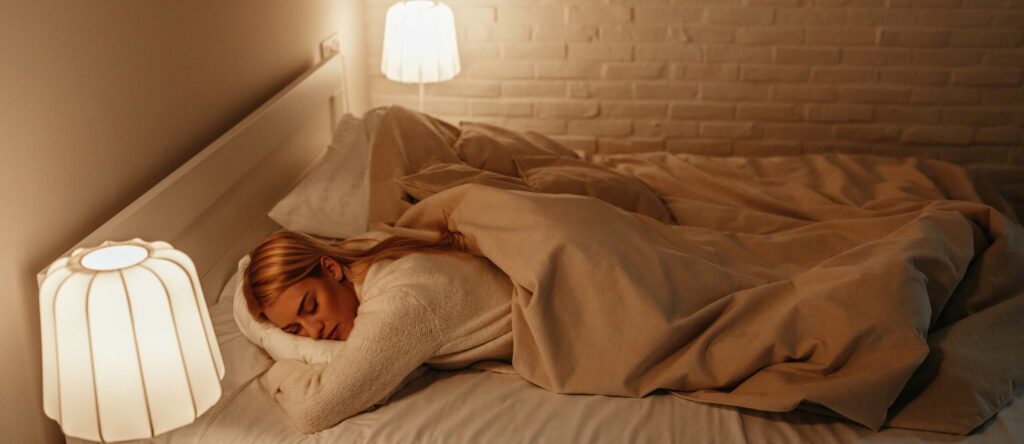
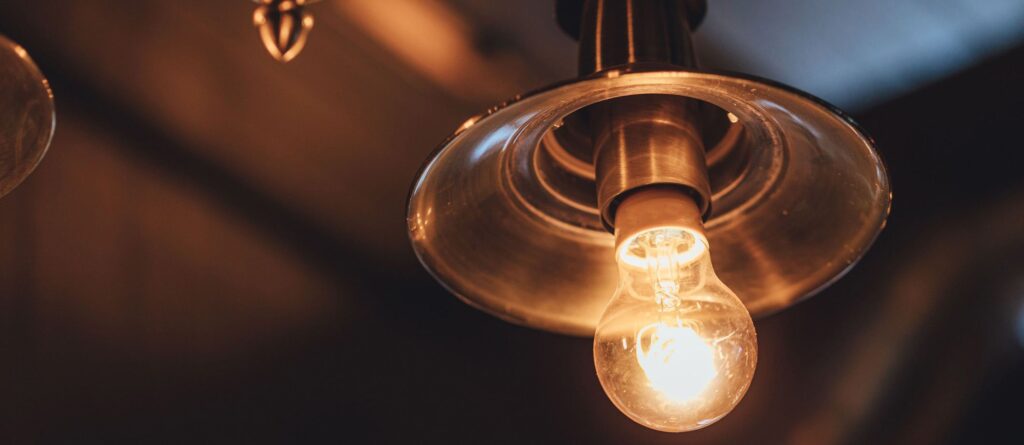
The light we are exposed to at different points in the day has a dramatic effect on our quality of sleep.
- Different light affects chemicals in our bodies
- Artificial lights and tech can suppress our melatonin
- Red light may stimulate melatonin
- Soft, pink light may positively impact sleep – but it’s yet to be proven
How lights help us sleep – and wake up, too!
When we are exposed to light in the morning, it activates the hypothalamus, a key part of the brain, to secrete a hormone called cortisol, which wakes us up, keeps us alert, and suppresses melatonin.
The photoreceptors in the retinal cells of our eyes are the pathway of light to our brain and are especially sensitive to short wavelengths of light, mainly blue and green.
Natural light in the morning contains a high amount of blue light, which reduces in the late evening. Consequently, the photosensitive retinal cells signal the brain to release melatonin into our bloodstream, causing drowsiness and helping us sleep.
This is how a normal sleep-wake cycle works.
However, with artificial lighting and increased use of digital devices, sleep is being disrupted in most people, as natural melatonin production is suppressed by blue and green light emitted from screens and bright artificial lighting.
If that’s the case, are there any lights that can help us sleep better?
Studies into the effect of light on sleep
There are few studies that suggest red light may stimulate melatonin production in people and can improve sleep quality.
A 2012 study also found that red light at an intensity of 10 lux or higher had the potential to induce sleep in mice. However, anything less than 10 lux had no effect.
Red light has longer wavelengths than blue light and can be less disruptive to sleep.
Red light also has a lower colour temperature than sunlight, which means it is a “warm” colour – on the lower end of the light spectrum – and can help make the transition from daylight to nighttime easier, without disrupting sleep.
Other colours close to red on the colour spectrum, such as yellow, orange, and amber, may also promote a good night’s sleep. Yellow and orange lights have little effect on the circadian rhythm and amber lights mimic the amber spectrum of candlelight and firelight, which can be soothing for sleep.
Can pink light help you sleep better?
There has been some suggestion to use soft pink light for sleep, since it is a combination of red and purple light waves, but there is no research as yet to back its effectiveness.
Naturally, blue, green, and white lights are the worst for sleep as they stimulate alertness and suppress melatonin production, resulting in poor sleep quality.
Many fluorescent lights, LEDs, and digital screens contain blue light.
While LEDs are popular from an energy-saving perspective, it’s important to remember that many ‘white’ LEDs emit a full visible spectrum of light, which includes blue light.
Cool white lights emit more blue than “warmer” white LEDS. Blue light is not bad light, but if you are exposed to it at night, it can disturb your sleep cycle.
Even though they seem to be the better option, red and amber lights still emit a tiny amount of blue and green light.
While it’s not visible to the naked eye, it can still disrupt your sleep, especially if you are using these lights in your bedroom as night lights or mood lights.
How new lighting innovation is aiding sleep
Fortunately, new innovations in lighting are leading to energy-efficient LEDs that sync with your biological rhythm. You can now get your hands on specially designed lights that only emit specific wavelengths without emitting blue or green light.
Since the current research on red light is limited, it’s too early to conclude that it can be used to promote good sleep.
However, one thing is clear – if you want to get a good night’s sleep, steer clear of blue and cool white lights!