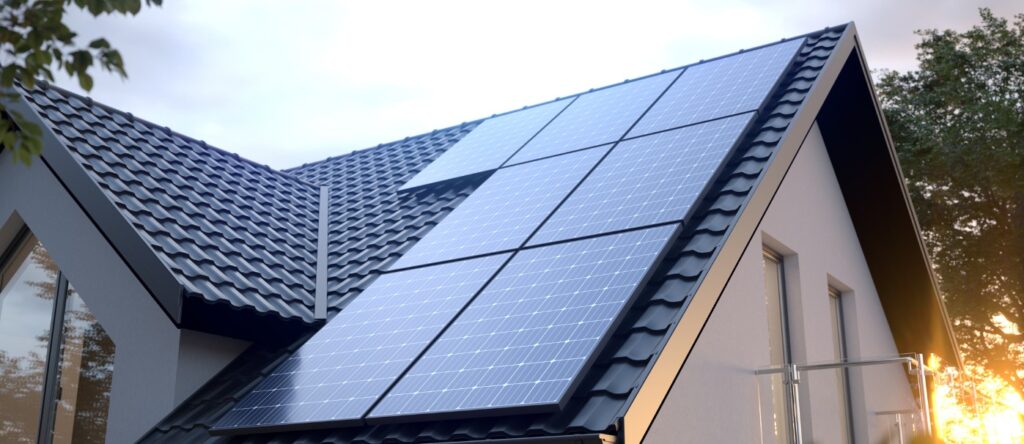
The answer, of course, is yes – so, here are a few answers to the questions clients will throw at you, and some tips on making solar a key talking point this winter.
What is solar panel performance in winter?
Solar panel performance in winter refers to how photovoltaic (PV) systems generate electricity during colder months with reduced daylight hours and lower sun angles. While overall output is lower than in summer, systems continue to generate electricity using available daylight rather than heat.
Key takeaways for electrical contractors
● Solar panels continue to generate power in winter using daylight, not heat
● Output varies by location, with northern regions seeing less seasonal drop
● Shading and frost can temporarily affect performance
● Cloudy days still produce usable energy
● Winter is an opportunity to discuss energy usage habits and battery storage
Location, location, location
Of course, winter solar performance isn’t just about the season – it’s heavily influenced by where you are in Australia. In the northern areas of the country – for example, far north Queensland and northern WA – experience less variation in daylight hours, meaning the solar output during the winter doesn’t drop as sharply. Heading south, you get shorter days and lower sun angles.
Morning frost, shading and maintenance
A key thing to keep in mind during winter is some smaller, often overlooked performance factors. Frost, condensation or a build-up of debris may not shut the system down, but it can temporarily reduce output in the early part of the day.
As the winter sun sits lower, trees, buildings or roof structures can cast different shadows across panels – meaning a system that’s largely shade free in the summer may experience some partial shading in winter, which can have a disproportionate impact on performance.
Do solar panels need heat to work?
‘It’s too cold for the panels to do much!’. If we had 10 bucks for every time we’d heard that one! Nope, solar panels aren’t humans, they don’t need some heat to get moving. Solar panels, of course, run on light rather than heat. In fact, PV efficiency can actually increase when the mercury drops.
‘Cloudy days are dead days’
‘There’s no direct sun, so I’m getting no power!’ It’s another one we’ve heard time and time again. But is it true? Nope. According to Solar Victoria, a 4.5kW system might produce 23kWh during a summer’s day – and it will still produce 9-15kWh during a standard winter day.
‘My neighbour’s system’s producing more than mine!’
The sun sits lower in the northern sky during winter, so if panels were installed flat to optimise summer sun, they may not produce as much during winter as they would if they were angled a bit differently. That’s an in for a smart solar operator – a winter efficiency check could lead to a tilt frame adjustment, saving bit of money for the customer as a result.
‘My energy bills are higher during winter’
They will be a bit higher during winter as there are fewer hours of sunlight, however this is a prime opportunity for you to share some very easy to implement tips for your customers. Using washing machines or dishwashers? Time them for when the solar system is producing more power – typically around 10am-3pm depending on location. You can also run an energy audit too, so see which appliances are sucking out more power than they should.
The battery conversation
If your client has solar but not a battery, it’s a good conversation to have – especially during winter. A half decent solar system will be churning out more kWh than can be used during the day, so given the meagre feed in tariffs available, the battery conversation’s a good one. It’s got to make economic sense, though. If a decent solar system is already installed, power bills are unlikely to be overly hefty. A $25,000 battery for a 75-year-old chap living by himself doesn’t add up financially. However, a $12,000 battery for a family of four in their ‘forever’ home could easily make sense. Remember to pitch it right – because this isn’t about a whole solar system, this is about replacing the cost of energy consumed once the sun’s gone down.
Frequently asked questions about solar panels in winter
Do solar panels stop working in winter?
No, they continue to generate electricity, although output is lower due to shorter daylight hours.
Do colder temperatures reduce solar efficiency?
No, solar panels use light, not heat. Cooler temperatures can improve efficiency.
How much power can solar generate in winter?
A 4.5kW system may produce around 9–15kWh on a typical winter day.
Do clouds stop solar generation?
No, panels still produce energy on cloudy days, just at reduced levels.
Can shading affect winter performance?
Yes, lower sun angles can introduce new shading, which may impact output.
What electrical contractors should remember
Solar systems remain effective throughout winter, but performance is influenced by location, daylight hours and system setup.
Contractors should focus on:
Setting realistic expectations around seasonal output
Identifying and addressing shading or maintenance issues
Advising on energy usage habits during daylight hours
Positioning battery storage as a targeted solution where appropriate
Winter provides a strong opportunity to reinforce the value of solar while building customer trust through clear, practical advice.
Discover the new-look Electrical Gems and what’s inside the Marketing & Reputation Issue for Australian electrical contractors.
[...]<p><a class="btn btn-secondary understrap-read-more-link" href="https://gemcell.com.au/news/electrical-gems-marketing-reputation-issue/">Read More...<span class="screen-reader-text"> from New launch: Electrical Gems – The Marketing & Reputation Issue</span></a></p>
The popular Ventair Stanza ceiling fan has been upgraded to an energy-efficient DC model, delivering a practical, modern solution for homes, classrooms, offices and light commercial spaces. Designed as a hassle-free retrofit, Stanza DC provides the power-saving benefits of DC motor technology while retaining the simplicity of a wall control. It is compatible with existing [...]<p><a class="btn btn-secondary understrap-read-more-link" href="https://gemcell.com.au/new-products/ventair-stanza-dc/">Read More...<span class="screen-reader-text"> from Ventair – Stanza DC</span></a></p>
The new LEDVANCE HouseGuard Security Floods are now available as a full family of products to suit every residntial application when you need instant light for safety and security. The range is available in both Back and White to complimentyour exterior colour. Single 12w ( Lumen package 1200lms ) and Twin 12w ( 24w Total [...]<p><a class="btn btn-secondary understrap-read-more-link" href="https://gemcell.com.au/new-products/ledvance-houseguard-security-floodlight/">Read More...<span class="screen-reader-text"> from LEDVANCE – HouseGuard Security Floodlight</span></a></p>