EV Charging in Strata Buildings: What Electrical Contractors Need to Know
May 22, 2026
As electric vehicle adoption continues across Australia, installing charging infrastructure in apartment buildings and strata developments is becoming increasingly complex.
More than 2.2 million Australians live in units, according to the latest Australasian Strata Insights Report. The majority of apartment buildings are strata titled, along with many townhouse complexes and commercial premises.
At first glance, pulling into a car park in an EV and plugging in an EV might seem straightforward. In practice, installing EV charging in strata buildings involves complex decisions around infrastructure capacity, funding models, planning and safety.
For electrical contractors, understanding these issues is essential to support informed conversations with strata managers, owners corporations and residents.
What is EV charging in strata buildings?
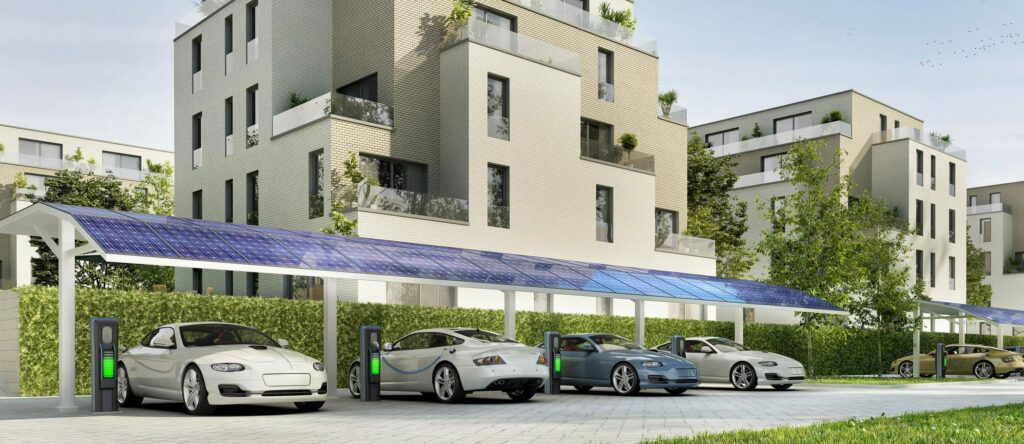
EV charging in strata buildings refers to the installation and management of electric vehicle charging infrastructure in apartment complexes and other multi-dwelling developments where parking areas and electrical systems are shared between residents.
Because the electrical infrastructure is communal, installing EV chargers often requires coordination between residents, strata committees, building managers and electrical contractors.
Retrofitting EV charging infrastructure into existing buildings can be costly
Several funding models may be used to manage installation and electricity costs
Site assessments help buildings plan staged EV charging rollouts
Public chargers connected to solar systems may create new revenue opportunities
Unsafe DIY charging arrangements can create serious fire risks
Who pays for EV charging in strata buildings?
As EV charging in strata buildings shifts from an “if” to a “how”, one of the biggest questions becomes who pays for the infrastructure and electricity use.
Retrofitting electrical infrastructure into existing apartment buildings can be extremely expensive, creating a major barrier to installation. Residents who do not own EVs are often reluctant to fund infrastructure that primarily benefits EV owners.
“There are some common approaches to avoiding that kind of cross-subsidy argument,” says Strata Community Association (SCA)president Joshua Baldwin.
Owner-funded charging (behind the meter)
One option is owner-funded charging connected directly to the resident’s electricity meter.
“One is owner-funded, behind the meter. Where that’s feasible, you can connect the charger to the apartment’s meter, so the EV owner pays for the energy. But in large apartment blocks, that’s quite difficult,” says Baldwin.
Shared infrastructure with submetering
Another option is installing EV chargers connected to common property power with submetering.
In this model, the owners’ corporation funds the base infrastructure while individual users pay for electricity consumption and a share of operating costs.
“That’s quite a popular option,” Baldwin explains, “because the ROI on that can slowly build back into the corporation’s funds.”
Third-party EV charging solutions
Where body corporates have limited funds, they may consider third-party charging providers or network solutions.
“And then if body corporates are really stretched, they can look at third party and network solutions,” Baldwin says.
“Just be sure they have read the contract carefully.”
Why planning EV charging infrastructure matters
Many EV owners want fast chargers capable of charging their vehicles within a few hours. However, installing fast charging infrastructure across an entire apartment building is rarely straightforward.
“The gold standard would be that everyone gets a charger, or the ability to access and wire in a charger to their direct car park,” Baldwin says.
“We’ve seen new buildings with the wiring all in place and a termination point in each car park. That assists renters as well because you can take the charger away when you’re finished, decommission it, and walk away.”
Retrofitting older buildings is far more complex. Even if a body corporate wants chargers installed across all parking bays, the existing electrical infrastructure may not support that approach.
The role of site assessments
Independent site assessments can help strata organisations plan EV infrastructure upgrades.
“An independent site assessor can work with the committee, the owners, the insurers and then the installing contractor, so everyone has a playbook as more EVs come into the market,” Baldwin says.
“We want contractors to be able to push on that as well and implore corporations to get a site assessment as the foundation for a designed and staged rollout, not a one-off install.”
Can strata buildings generate income from EV chargers?
Buildings that already have solar arrays and generate significant daytime power may be able to resell electricity through EV charging.
“Where buildings have existing solar arrays and are generating a huge amount of power during the day, there’s an option to resell it to the market via public chargers,” Baldwin says.
“We’ve got members who have EV chargers external to the buildings as well as internal, so members of the general public can connect in. It’s a great way for a strata building to generate income.
“They can sell power for significantly more than they’d get selling it back to the grid.”
Local councils may also support publicly accessible charging infrastructure.
“They might look at that and say if you’ve got a publicly accessible charger, we’ll provide some funding towards that, because it helps the betterment of the community.”
The risk of poorly planned EV charger installations
The solar industry previously experienced problems with “fly-by-night” operators installing systems without proper planning.
Baldwin warns that similar issues could occur in EV charging installations.
“A strata, to these people, is like a wedding at a function centre,” he says.
“They come in with their flashy brochures and say, this is what you need — a fast charger in every bay — and then it all falls over because the capacity of an old building is nowhere near good enough.
“The last thing you want is power trickling into the cars because they’re all plugged in at the same time.
“A good contractor following a proper plan will overcome this right from the start.”
Fire safety considerations for EV charging in strata buildings
Concerns about EV fires often appear in public discussion. However, evidence shows electric vehicles are no more likely to catch fire than internal combustion vehicles.
Because EVs use lithium-ion batteries, they do present different safety considerations that must be taken into account during installation and building management.
“I’m a volunteer firefighter myself, and an EV battery provides its own little fire triangle,” Baldwin says.
“That’s why it’s imperative strata properties have compliant installation, sensible building controls, remote monitoring, and adherence to relevant electrical standards and the manufacturer’s instructions.”
Clear rules should also prevent unsafe DIY charging methods.
“I’ve gone to properties where I’ve seen 20-metre extension cables from level two all the way down to the car park,” Baldwin says.
“That’s where fires happen.”
Frequently asked questions about EV charging in strata buildings
Can EV chargers be installed in apartment buildings?
Yes. EV chargers can be installed in strata buildings, although infrastructure upgrades and planning may be required depending on the building’s electrical capacity.
Who pays for EV charging infrastructure in strata buildings?
Costs may be managed through owner-funded chargers connected to apartment meters, shared infrastructure with submetering or third-party charging providers.
Why are site assessments important for strata EV charging?
Site assessments help determine a building’s electrical capacity and allow contractors and strata organisations to plan staged EV charging rollouts.
Are EV chargers safe in apartment buildings?
Yes. Electric vehicles are no more likely to catch fire than internal combustion vehicles, but installations must comply with electrical standards and manufacturer instructions.
What do electrical contractors need to remember about EV chargers in strata buildings?
As EV adoption continues to grow, demand for EV charging infrastructure in apartment buildings will increase.
Electrical contractors working with strata organisations should encourage planning, site assessments and compliant installations to ensure charging infrastructure can safely support future EV uptake.
EV chargers are just one of a number of opportunities for contractors to grow and diversify their income streams – download our guide to find out more.
Discover the new-look Electrical Gems and what’s inside the Marketing & Reputation Issue for Australian electrical contractors.
[...]<p><a class="btn btn-secondary understrap-read-more-link" href="https://gemcell.com.au/news/electrical-gems-marketing-reputation-issue/">Read More...<span class="screen-reader-text"> from New launch: Electrical Gems – The Marketing & Reputation Issue</span></a></p>
The popular Ventair Stanza ceiling fan has been upgraded to an energy-efficient DC model, delivering a practical, modern solution for homes, classrooms, offices and light commercial spaces. Designed as a hassle-free retrofit, Stanza DC provides the power-saving benefits of DC motor technology while retaining the simplicity of a wall control. It is compatible with existing [...]<p><a class="btn btn-secondary understrap-read-more-link" href="https://gemcell.com.au/new-products/ventair-stanza-dc/">Read More...<span class="screen-reader-text"> from Ventair – Stanza DC</span></a></p>
The new LEDVANCE HouseGuard Security Floods are now available as a full family of products to suit every residntial application when you need instant light for safety and security. The range is available in both Back and White to complimentyour exterior colour. Single 12w ( Lumen package 1200lms ) and Twin 12w ( 24w Total [...]<p><a class="btn btn-secondary understrap-read-more-link" href="https://gemcell.com.au/new-products/ledvance-houseguard-security-floodlight/">Read More...<span class="screen-reader-text"> from LEDVANCE – HouseGuard Security Floodlight</span></a></p>