Australian infrastructure projects – what’s happening, and why?
June 25, 2025
Australian infrastructure projects
The Australian infrastructure projects that have been completed, the projects that are underway, and the factors affecting how quickly we can move.
The continuing development of our towns, cities, transport systems and energy supply is essential – after all, building infrastructure anywhere is never a ‘once and done’ kind of job.
But what’s been happening over recent years in terms of Australian infrastructure investment, and where have the strategic priorities been? What’s holding jobs up and what’s needed to keep the country evolving to meet the needs of today, as well as tomorrow?
We find out.
The value of Australian infrastructure projects
Money’s key, of course, when it comes to building infrastructure. The Major Public Infrastructure Pipeline is currently standing at around $213bn for the five years to 2028, with transport infrastructure accounting for 59% of that ($126bn). Buildings ($71bn) and utilities ($16bn) account for much of the rest.
The Supply Chain
Trump’s tariffs are likely to shake up the supply chain once more, and the supply chain issues we’ve faced as a country over recent years are well documented. The cost of construction materials – and therefore infrastructure projects – continues to rise, with most materials experiencing three years of price growth. That has softened, with some steel prices dropping, but industry reports suggest there’s been a 10-20% increase in non-labour inputs over the last year, and we’ve not peaked yet.
That’s only just over half of what’s needed, though, with a predicted shortage of 197,000 workers this year. Trade workers are expected to surpass engineers this year as the group of workers needed most. The industry overall isn’t confident about meeting demand – businesses surveyed about these shortages expect the situation to worsen, citing too much demand.
Project delays – the knock-on effects
Around 7% of the construction pipeline – approximately $15bn – has been impacted by delays, from either material shortages, labour shortages or troublesome site conditions.
Key programs and initiatives
The Infrastructure Investment Program is designed to deliver nationally significant projects while addressing inflation and cost-of-living pressures, and the government has committed more than $120bn for the program.
The Growing Regions Program, meanwhile, has $600m ring-fenced for regional projects – approximately $207m has been allocated for 40 projects approved under this program.
The Roads of Strategic Importance (ROSI) initiative is focused on connecting regional businesses to markets and improving connections between regional and rural communities. This program funds up to 80% of the project cost, with the remainder made up by state, territory and local government funding.
Meeting tomorrow’s energy needs
Energy projects are, of course, big, big business – and a number of them are already underway to meet the energy requirements of the future. The (seemingly neverending) Snowy 2.0 hydro project is still ongoing, expanding the original scheme with a 27km underground tunnel and new underground power station, while the Goyder South Wind Farm in South Australia opened its turbines last year. The EnergyConnect transmission line connecting South Australia, Victoria and New South Wales is due for completion this year, and next year construction is expected to begin on the Eurimbula Solar Farm in Queensland. Work on the Melbourne Renewable Energy Hub in Victoria, meanwhile, is underway and is set to become the state’s largest solar farm.
Building Australia – 5 big projects recently delivered, or coming soon
WestConnex (Sydney, New South Wales)
If you’ve used WestConnex you can’t help but be pretty impressed. This 33-kilometre motorway began work 10 years ago and was finished in late 2023. It was due to cost $10bn, and in the end, final project costs reportedly exceeded $45bn – but anyone commuting around Sydney will likely agree it was money well spent!
Aerial drone view of WestConnex Rozelle Interchange.
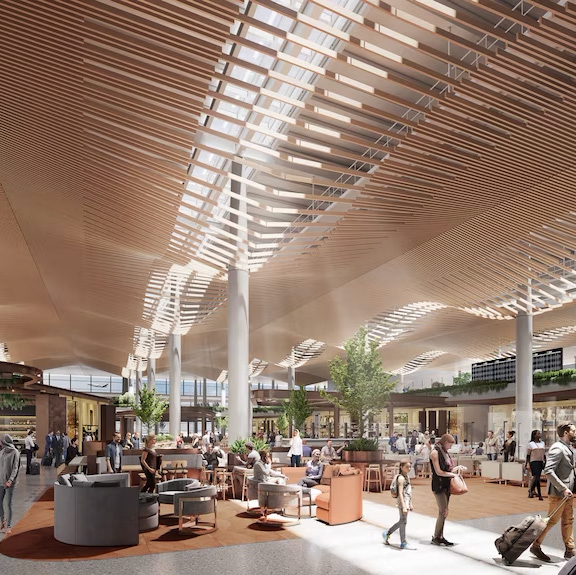
Western Sydney Airport (Nancy-Bird Walton Airport, New South Wales)
The long-talked about Western Sydney Airport is slated for opening in late 2026, and could create a significant economic boost for New South Wales and greater Sydney. Total costs are expected to come in at $5.3bn, and all going well, it’ll handle 10m passengers annually upon opening – increasing to 80m in the future.
Western Sydney Airport.
North East Link (Melbourne, Victoria)
This major road project connects the M80 Ring Road to the Eastern Freeway and is expected to be complete by 2027, after work began in 2020. Total costs are estimated to be $15.8bn.
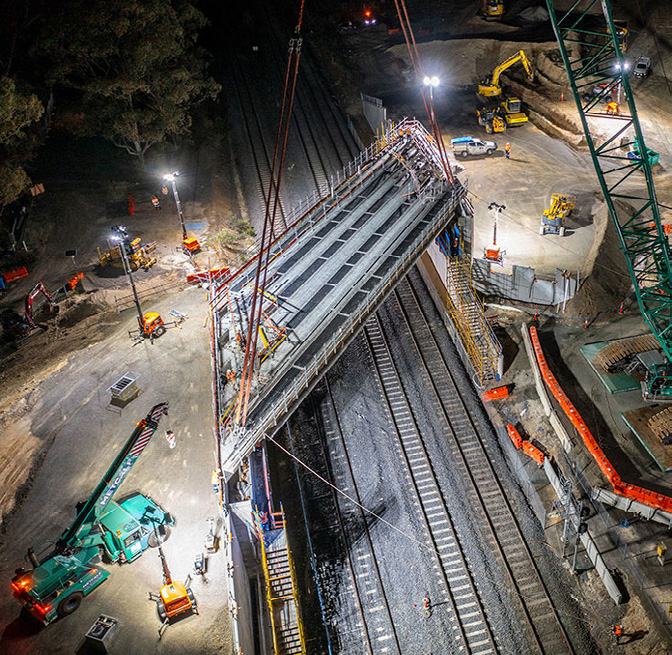
Inland Rail (Victoria to Queensland)
By 2027, this 1600km freight rail line connecting Melbourne and Brisbane is due to be operational, enabling an easier movement of goods between major cities. Total cost? Approx. $31bn – and counting!
Installing beams on Inland Rail line.
North-South Corridor – River Torrens to Darlington (Adelaide, South Australia)
The last section of this continuous motorway between Gawler and Old Noarlunga is expected to be completed by 2031 at a cost of $15.4bn.
A practical guide to staff expenses for tradies, covering expense policies, receipts, approvals, red flags and job-level cost tracking. [...]<p><a class="btn btn-secondary understrap-read-more-link" href="https://gemcell.com.au/news/staff-expenses-tradies-electrical-business/">Read More...<span class="screen-reader-text"> from Staff expenses 101 – a tradie’s guide</span></a></p>
What electrical contractors need to know about security camera installation, privacy, audio recording, placement and practical compliance. [...]<p><a class="btn btn-secondary understrap-read-more-link" href="https://gemcell.com.au/news/security-camera-installation-electrical-contractors/">Read More...<span class="screen-reader-text"> from Caught On Camera: The Dos And Don’ts Of Security Camera Installation For Electrical Contractors </span></a></p>
Explore insurance for electrical contractors, including public liability, professional indemnity, personal injury, tools and trailer cover. [...]<p><a class="btn btn-secondary understrap-read-more-link" href="https://gemcell.com.au/news/insurance-for-electrical-contractors/">Read More...<span class="screen-reader-text"> from Insurance For Electrical Contractors: What Cover Should You Consider?</span></a></p>